Design-crew
An agent pipeline where I make every call at the human gates.
- My part
- Designed the pipeline and made every call at the human gates
- When
- Built afterward, for the Fleet Console re-creation. Not used at Woven
- Built on
- Claude agents (Opus, Sonnet, Haiku) that read and write small files
How it works
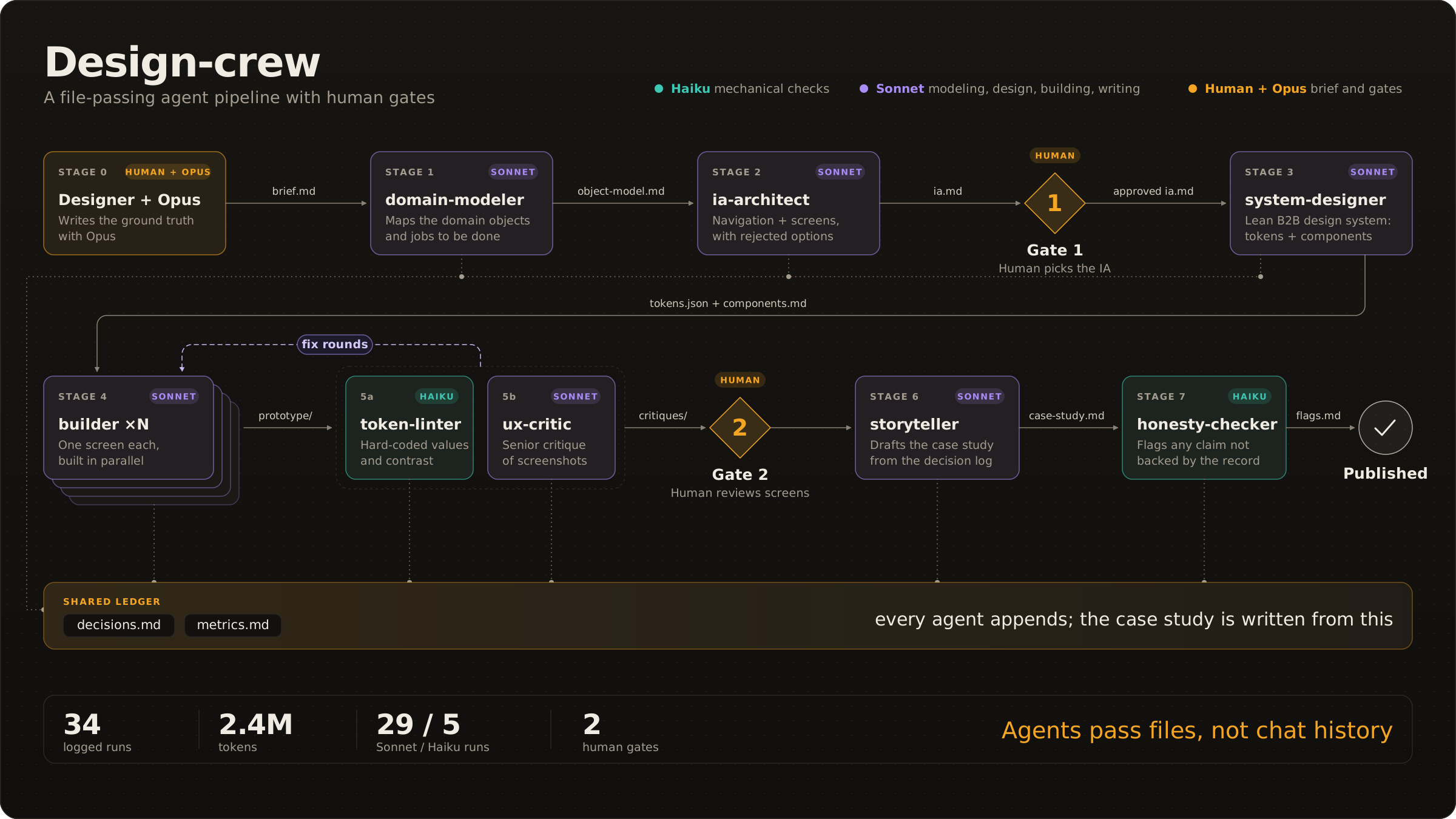
Agents pass files, not chat history
Each agent reads a few small files and writes one. A shared ledger of decisions and metrics is the memory.
Where I decide
Two gates where only I decide
Gate 1: the IA
I chose workflow-first from three IA models, and marked which agent defaults were unconfirmed assumptions.
Gate 2: the screens
I reviewed prototype screenshots, and my critique drove the second fix round.
Routing
- logged agent runs, on one day
- 34
- tokens across those runs
- 2.43M
- Sonnet / Haiku runs
- 29 / 5
- human gates
- 2
Cheap models for volume, people for judgment
Opus and I wrote the brief and made the gate calls; Opus tokens aren't logged.
What it caught
What the critics caught
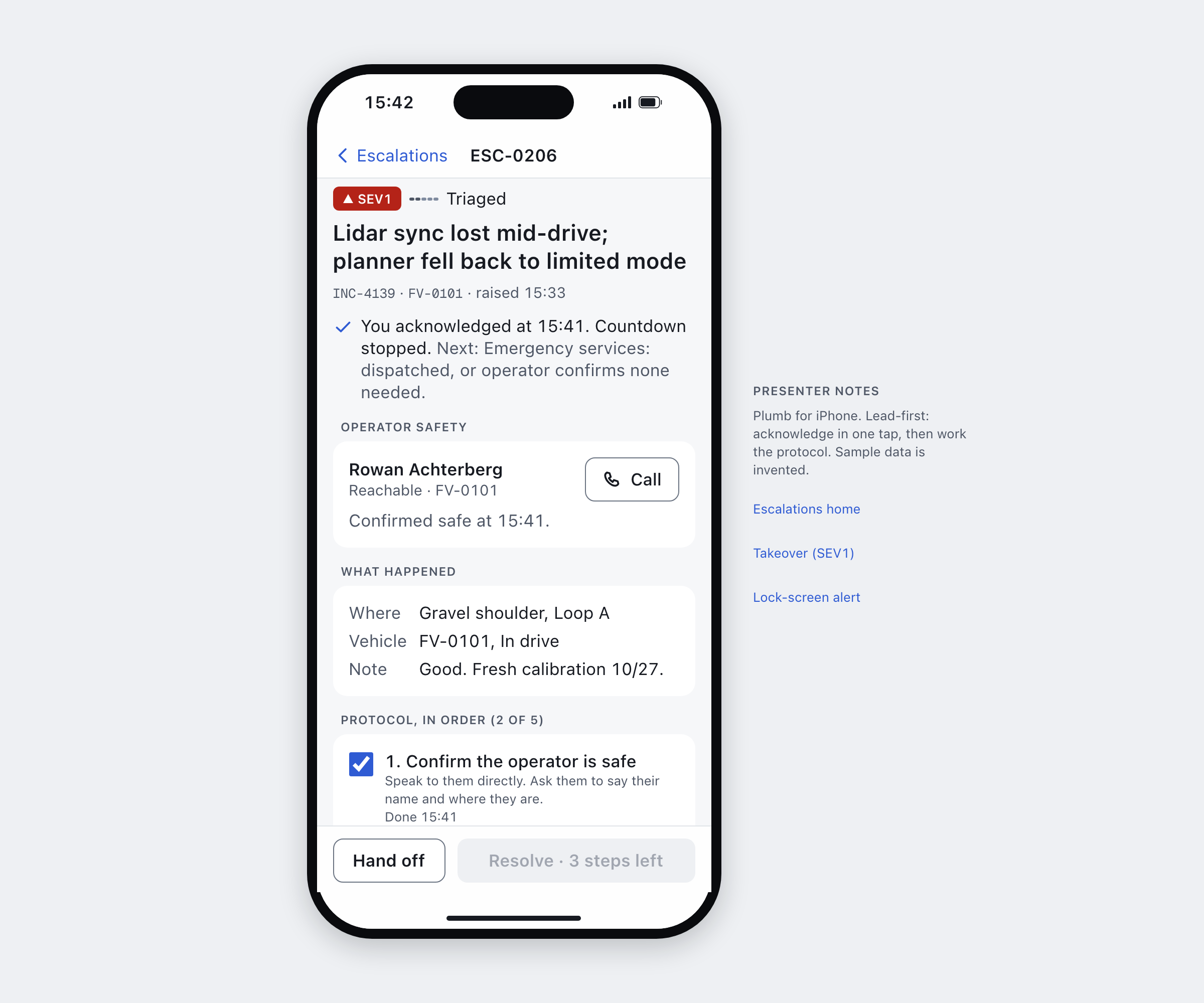
Resolve wasn't disabled
The button was never passed disabled. It now stays locked, with the reason inline.
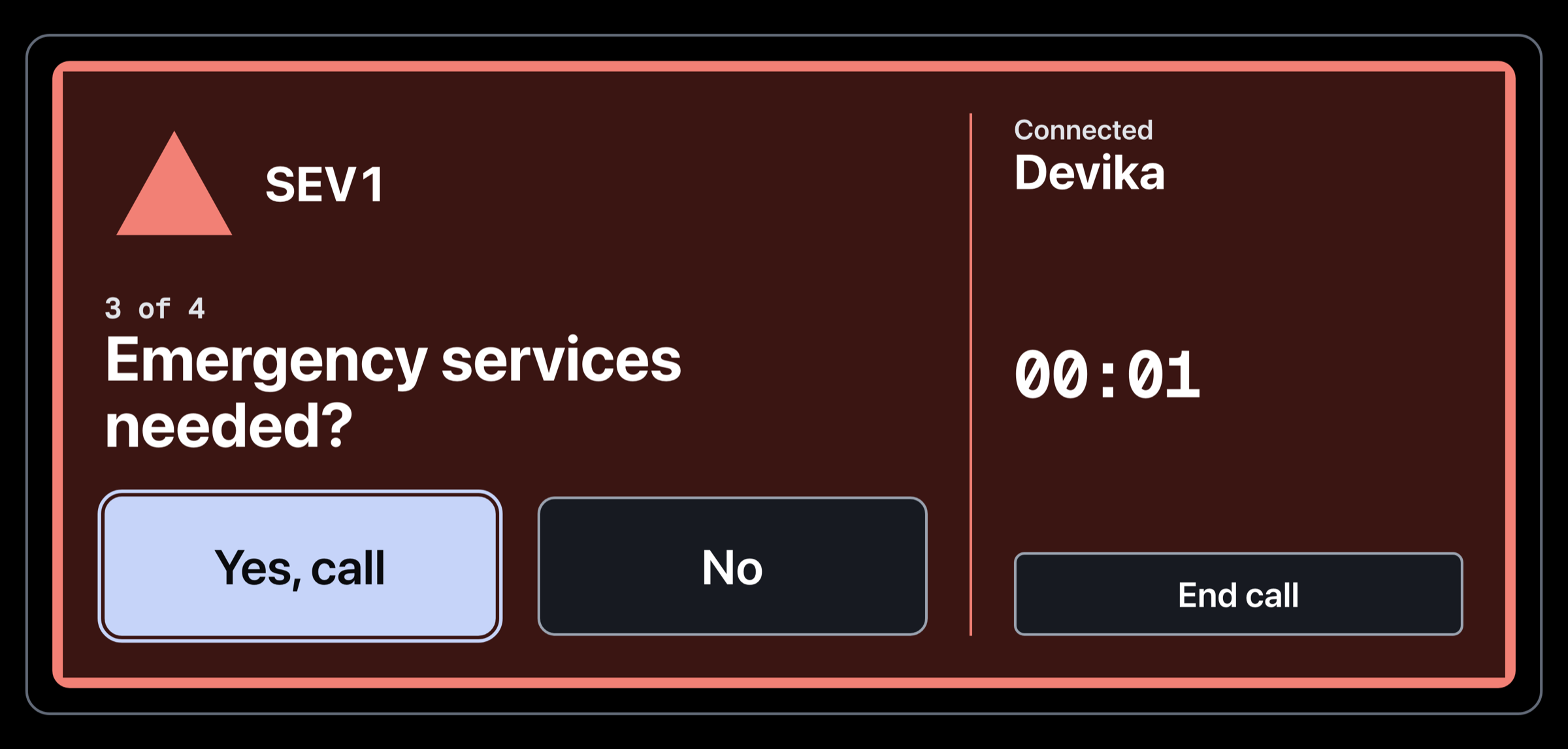
A question, one answer key
“Are you safe?” offered only Done. It now has Yes and No keys.
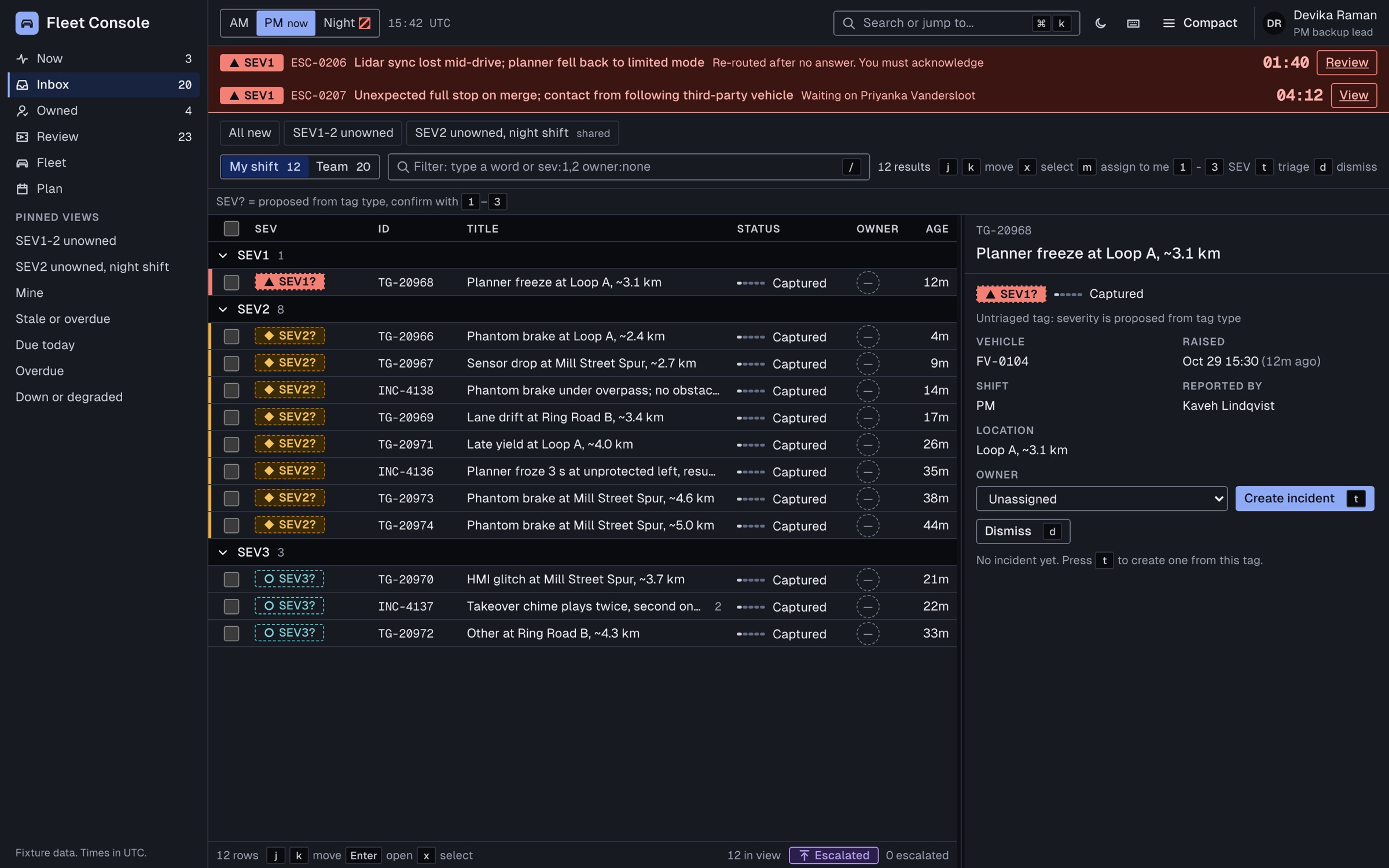
Columns off-screen
Status, Owner and Age were clipped. It took three passes to fix the cause.
Limits
What it can't prove
- No benchmark against working alone. The numbers measure effort, not quality.
- The critic judged static screenshots, and contrast checks cover color only.
- The agents invent things. Protocol steps, severity map and timeout are placeholders only a safety owner can check.
The result is Fleet Console. Code: GitHub (opens in new tab).