Spatial Showroom
A Vision Pro showroom, live on the App Store.
- My part
- UI design and UX research
- When
- 4 months
- Built on
- visionOS, Meta Quest and iOS
Live on the AppStore
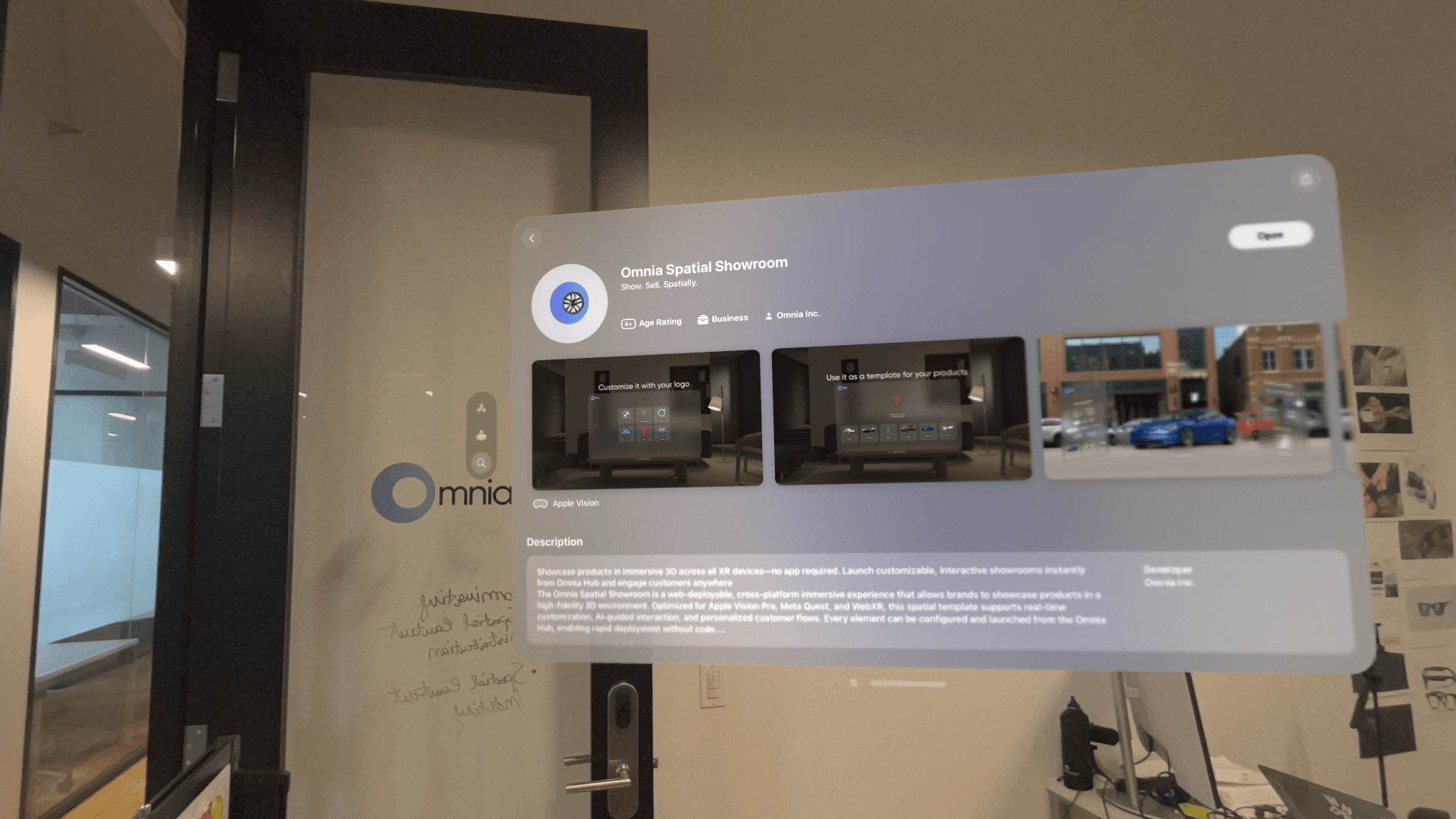
Proud to announce that the Omnia Virtual Showroom is live on the VisionOS App Store!
Research Methods
- 01
I organized a full-stack team to address development, backend requirements, 3D model delivery, and prototyping in Figma and code.
Tap to flipFull notes for Brainstorming Sessions:
Organized a full-stack team to go over all aspects of developing such an app. Addressed development issues, backend, and 3D model implementation to manage content uploads, delivery, recommendations, and more. Prototyped in Figma and further in development
- 02
I evaluated web car configurators to borrow functional configuration features and translated those mechanics into a Vision Pro app.
Tap to flipFull notes for Competitor Analysis:
Identified web-based car configurators from name brands that prioritize functionality and configuration options over augmented reality features. Took functional inspiration and applied it to a Vision Pro application with more features.
- 03
I conducted over 25 interviews with traditional media users, spatial content creators, headset owners, and founders on use cases.
Tap to flipFull notes for User Interviews:
Conducted 25+ interviews with users of traditional media outlets, creators looking to publish spatial content, headset owners, and even company founders to evaluate business use cases.
- 04
We created personas for tech-savvy buyers and shoppers who needed real-life views, using their constraints to prioritize showroom features.
Tap to flipFull notes for Persona Building:
We developed user personas representing car buyers, including those who are tech-savvy and those who need to view their car in real life, ensuring our platform addressed their needs. These profiles provided insights into motivations, constraints, and expectations, guiding feature prioritization and user-centric design.
- 05
We organized insights from interviews, competitor audits, and brainstorming sessions into categorized pain points, needs, and prioritized features.
Tap to flipFull notes for Affinity Mapping:
We synthesized insights from user interviews, competitor analysis, and team brainstorming sessions through affinity mapping. This process enabled structured categorization of user pain points, core needs, and prioritized features. As a result, all design decisions were grounded in validated, user-centered insights.
Show full notes
01Brainstorming Sessions
Organized a full-stack team to go over all aspects of developing such an app. Addressed development issues, backend, and 3D model implementation to manage content uploads, delivery, recommendations, and more. Prototyped in Figma and further in development
02Competitor Analysis
Identified web-based car configurators from name brands that prioritize functionality and configuration options over augmented reality features. Took functional inspiration and applied it to a Vision Pro application with more features.
03User Interviews
Conducted 25+ interviews with users of traditional media outlets, creators looking to publish spatial content, headset owners, and even company founders to evaluate business use cases.
04Persona Building
We developed user personas representing car buyers, including those who are tech-savvy and those who need to view their car in real life, ensuring our platform addressed their needs. These profiles provided insights into motivations, constraints, and expectations, guiding feature prioritization and user-centric design.
05Affinity Mapping
We synthesized insights from user interviews, competitor analysis, and team brainstorming sessions through affinity mapping. This process enabled structured categorization of user pain points, core needs, and prioritized features. As a result, all design decisions were grounded in validated, user-centered insights.
How it Started?
UX Process
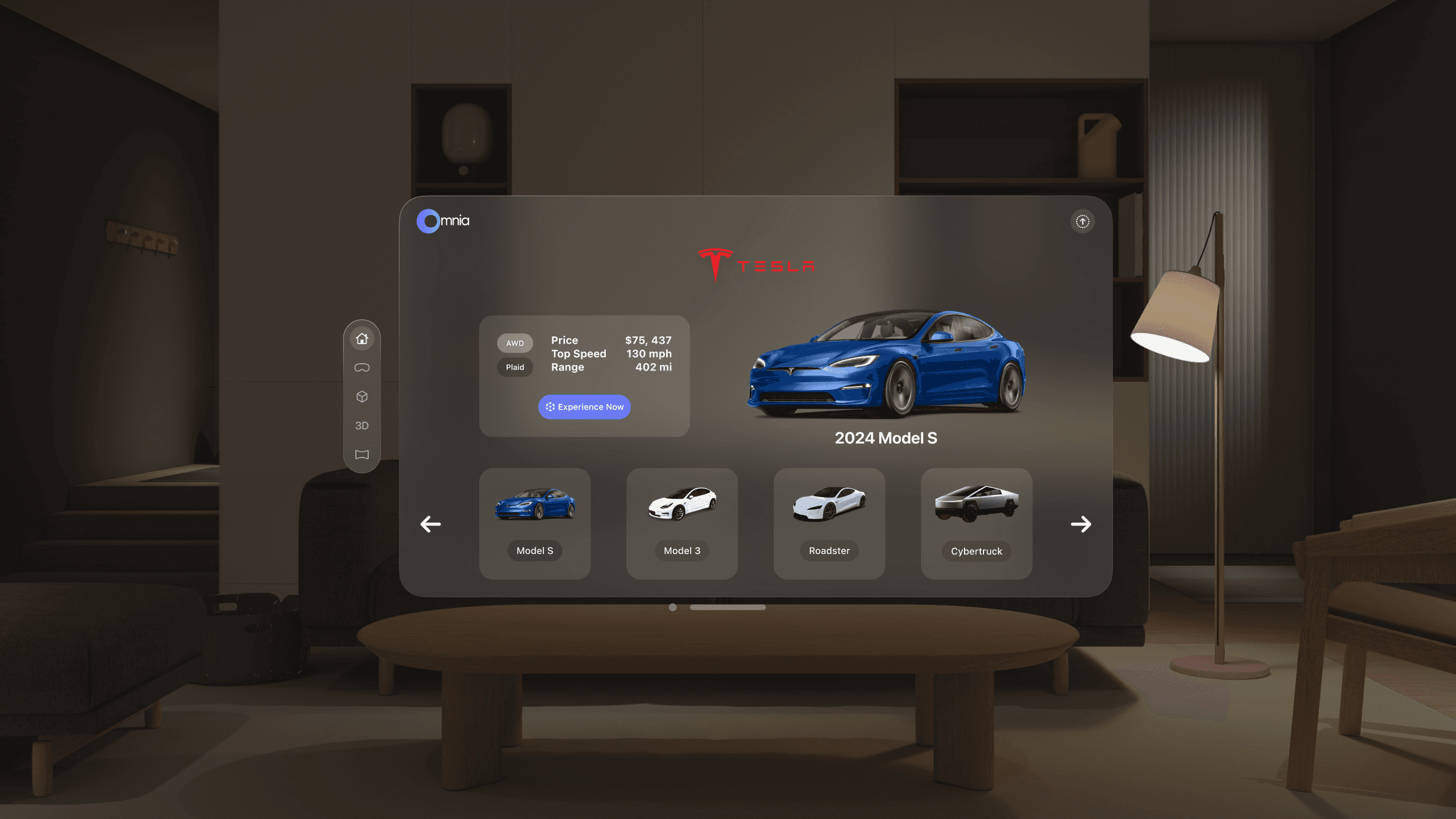
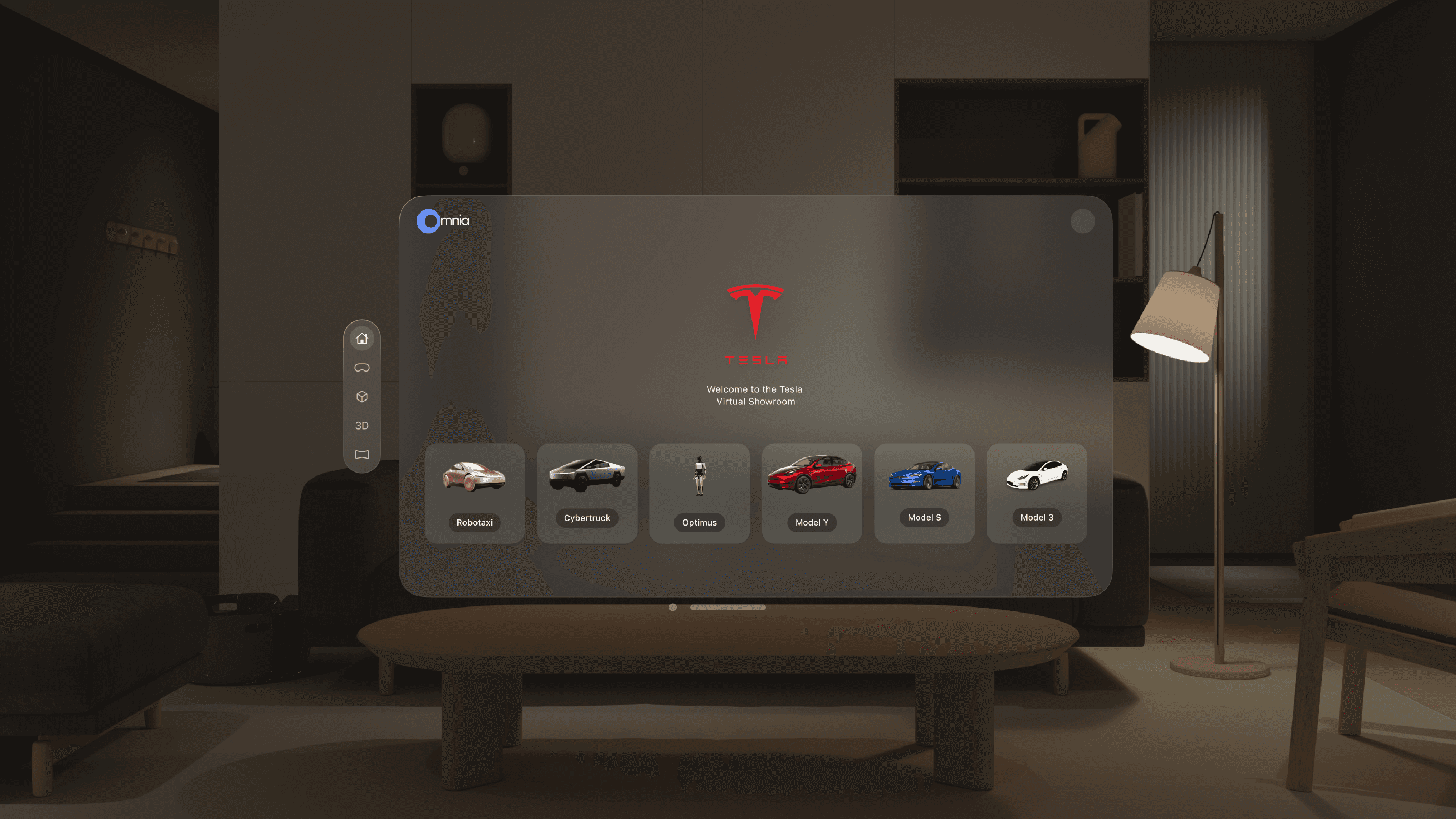
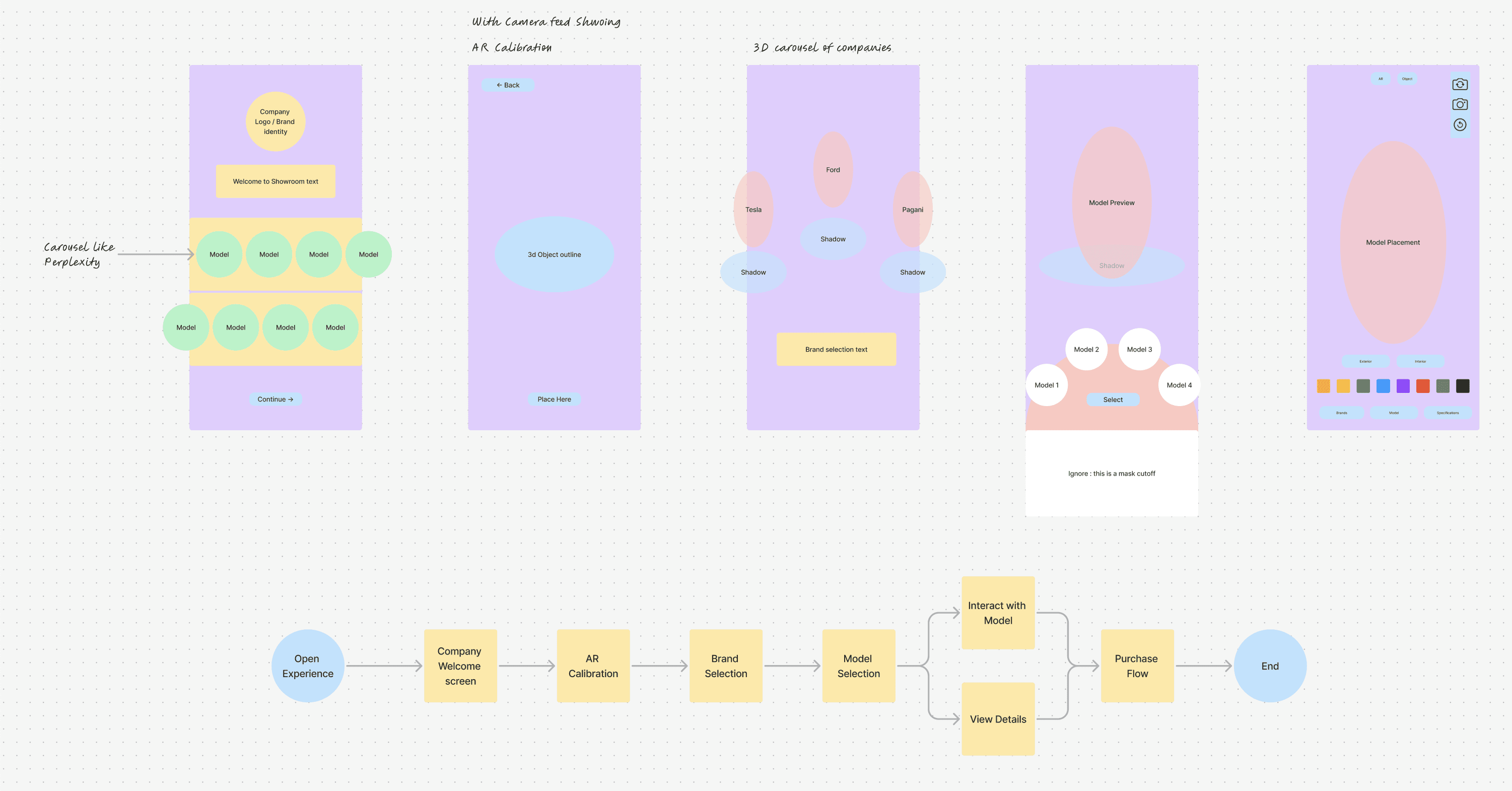
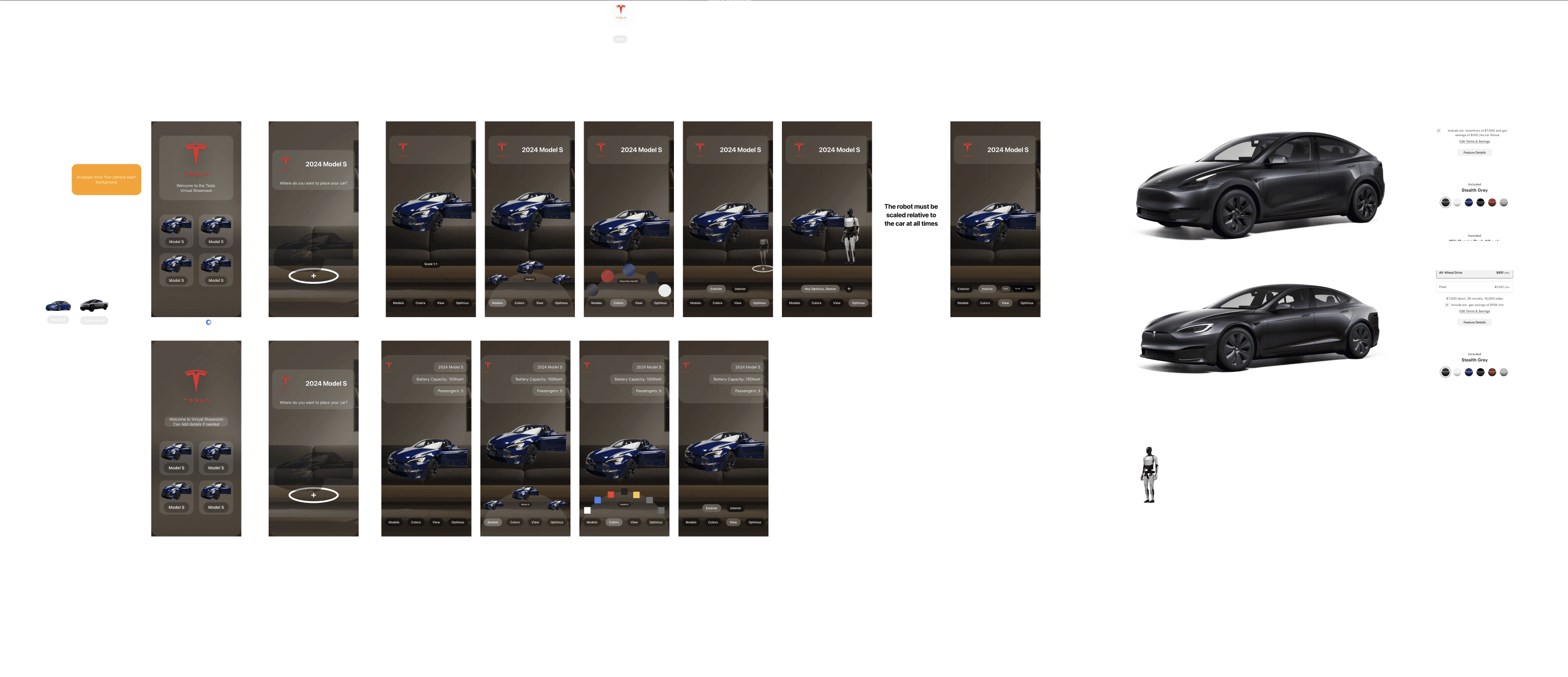
Tesla of River North approached our company intending to create and showcase an XR-based app at their showroom event on November 21st, 2024. After a few discussions, we set our minds on a virtual car showroom with customization options and fun, quirky features to get people interested. Using our specialties in VisionOS and MobileXR development, we got to work. Sketches on paper turned to FigJam mockups. These focused on the landing page and the UI for viewing the car. It was important for users to go through a step to place their car, which also allowed the program to load the heavy 3D model in the background.
Feature #1
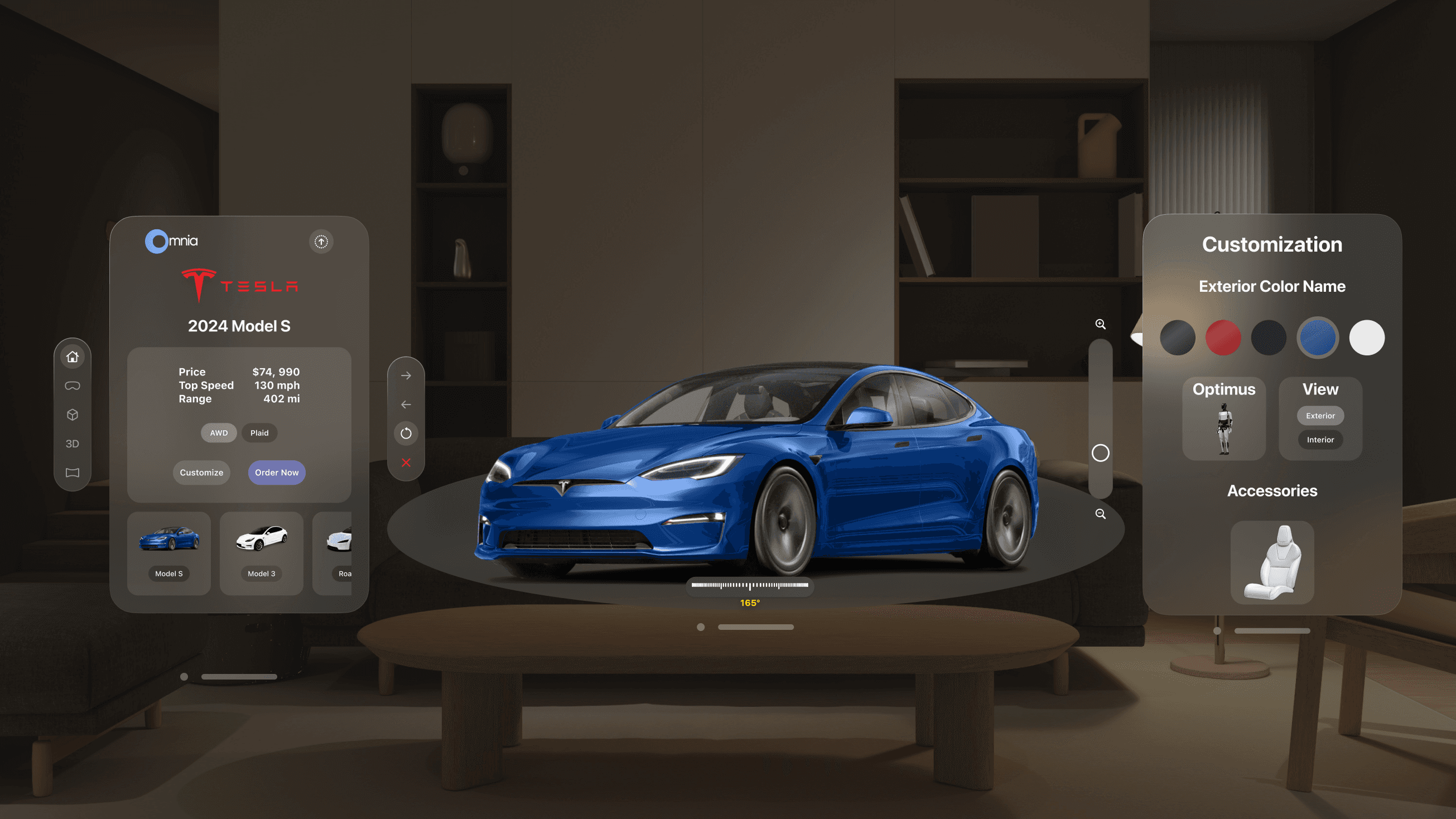
Realistic Car Viewer
A Tesla showroom in the comfort of your home. You have the ability to view all their products life-size and interact with them as if you own them! Customize the colors, wheel designs, and interior features to your liking before placing your order for your very own car.
Feature #2
Immersive Viewer
A Tesla showroom in the comfort of your home. You have the ability to view all their products life-size and interact with them as if you own them! Customize the colors, wheel designs, and interior features to your liking before placing your order for your very own car.
Tesla - Emerging Tech Event
Showcasing and Testing
The Tesla showroom event aimed to lure potential buyers and people interested in futuristic technology. This meant people needed to be exposed to Tesla's car and their appeal, along with new tech that would leave them in awe. The app had to be easy enough to demo to about 100 people in a matter of minutes per person. A quick plug-and-play solution where the setup time had to be minimal.